SEO Audit Checklist for Modern Websites: A Complete Technical and Strategic Guide

Discover a comprehensive SEO audit checklist to enhance your website's performance and visibility in search results. Optimize today!

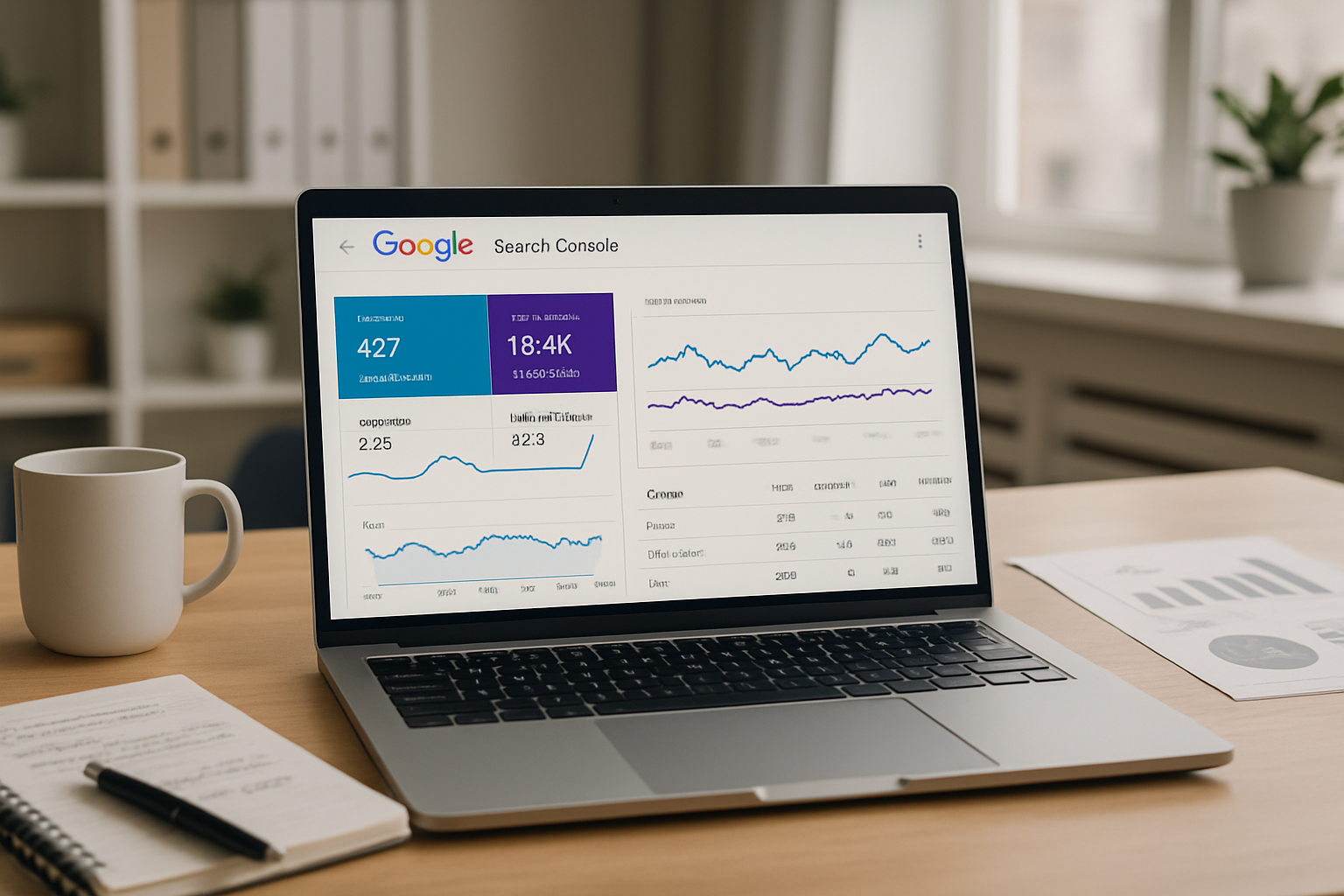
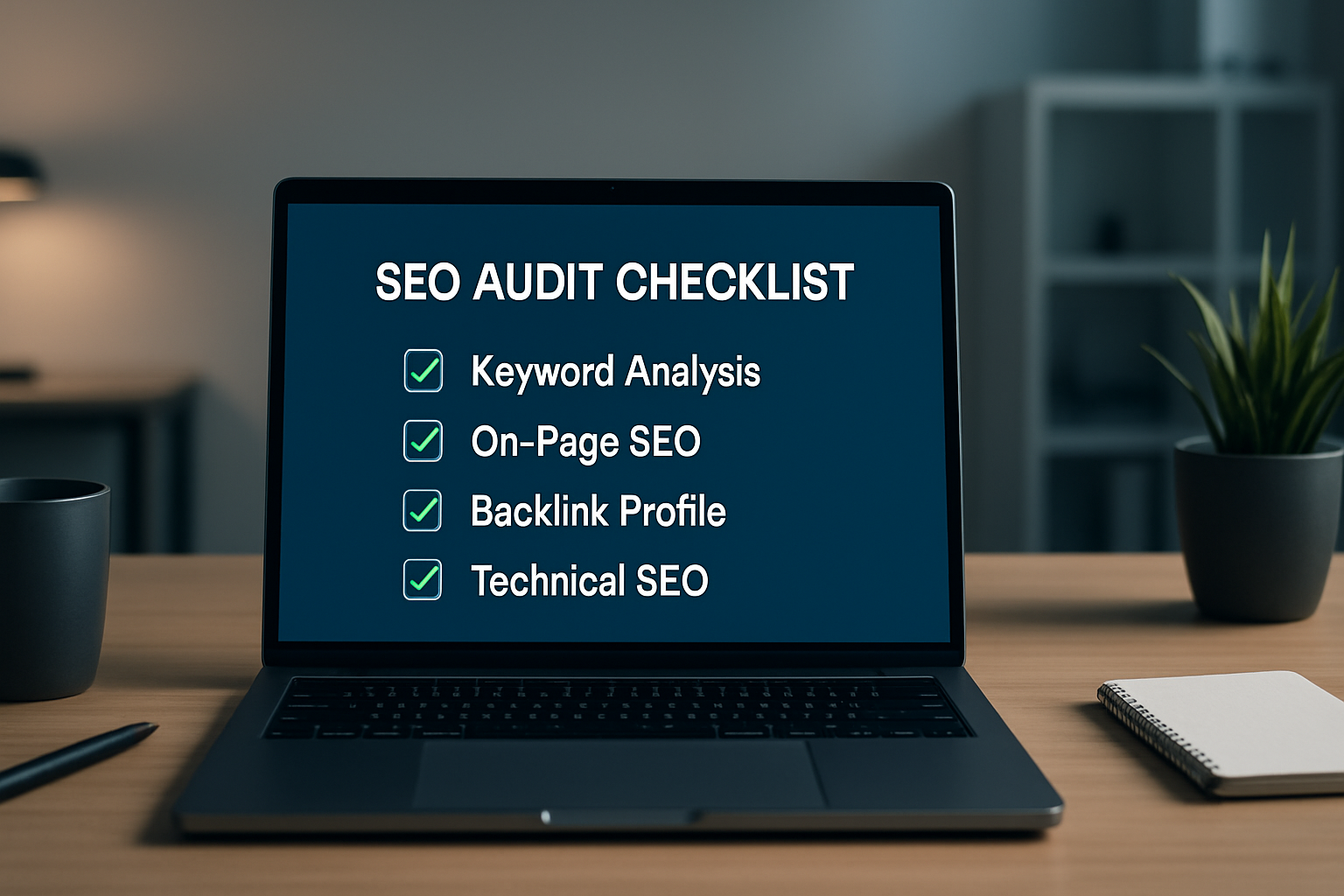
A digital workspace showcasing an SEO audit checklist on a laptop screen.
Explore the essentials of conducting a thorough SEO audit for modern websites.

Most websites are underperforming in search not because of a single catastrophic failure but because of an accumulation of smaller problems that compound over time. A broken canonical tag here, a missing meta description there, a crawlability barrier introduced during a site migration, a content section that has drifted into thin territory as the business evolved. None of these issues alone would derail an otherwise healthy site. Together, they create a ceiling on organic performance that no amount of new content will break through. A systematic SEO audit is the mechanism for finding and removing that ceiling. This guide gives you the complete SEO audit checklist for modern websites, with explanations substantial enough to act on and implementation guidance specific enough to produce results.

What an SEO Audit Actually Encompasses

An SEO audit is a structured evaluation of every factor that influences how search engines discover, understand, evaluate, and rank your website. The scope of a thorough audit is broader than most practitioners assume. It covers the technical infrastructure that determines whether Google can access your content at all, the on page signals that communicate relevance for specific queries, the content quality and semantic depth that determine whether your pages pass Google's quality thresholds, the external authority signals that determine your competitive standing in queries, and the performance characteristics that influence both user experience and ranking signals.

A properly executed SEO audit does not produce a list of problems for its own sake. It produces a prioritized remediation roadmap where each item is connected to a specific ranking impact and a specific fix. The audit checklist below is organized to reflect that output: not a collection of boxes to tick but a diagnostic framework organized by functional area, each with clear criteria for passing or failing and clear actions for each failure condition.

The Complete SEO Audit Checklist for Modern Websites

Section 1: Technical SEO

Technical SEO is the foundation layer. Problems here suppress the impact of everything else. Complete this section before evaluating any other area.

  • Robots.txt configurationVerify your robots.txt file at yourdomain.com/robots.txt. Confirm that no Disallow directive is blocking Googlebot from accessing pages you need indexed. Staging environments frequently carry a "Disallow: /" rule into production during site migrations. Use Google Search Console's robots.txt tester to simulate Googlebot's interpretation of your current rules. Any rule blocking important page templates requires immediate correction.
  • XML sitemap accuracy and submissionYour XML sitemap should include every canonical, indexable URL on your site and exclude redirected URLs, noindexed pages, error pages, and canonicalized duplicates. Submit your sitemap through Google Search Console and monitor the submitted versus indexed count. A large gap between submitted and indexed URLs indicates systematic indexing problems that require investigation by page type.
  • HTTPS implementation and securityConfirm that your entire site serves over HTTPS with a valid SSL certificate. Verify that HTTP versions of all URLs redirect permanently to their HTTPS equivalents. Mixed content warnings, where a page served over HTTPS loads resources over HTTP, undermine security signals and can suppress rankings. Audit your page source for mixed content using browser developer tools or a dedicated scanning tool.
  • Canonicalization architectureEvery page must have a single definitive URL that all other versions point to via canonical tags or redirects. Audit for: www versus non www URL conflicts, trailing slash inconsistencies, parameter variations creating duplicate URLs, HTTP and HTTPS canonical mismatches, and self referencing canonical tags that point to incorrect URLs. A crawl tool will surface canonicalization inconsistencies at scale across your entire URL inventory.
  • Redirect chains and loopsEvery redirect chain adds latency and dilutes link equity. A URL that redirects to another URL that redirects to a third URL before reaching the destination is passing Googlebot through unnecessary friction. Audit for chains longer than one hop and consolidate them into direct redirects. Redirect loops, where URL A redirects to URL B which redirects back to URL A, prevent indexing entirely and must be resolved immediately.
  • JavaScript rendering and crawlabilityFor sites built on React, Vue, Angular, or other JavaScript frameworks, verify that Googlebot receives meaningful content in the initial HTML response without requiring JavaScript execution. Use Google Search Console's URL Inspection tool to compare the rendered version Google sees against what a browser renders after full JavaScript execution. Significant discrepancies indicate server side rendering or static generation gaps that may be preventing content from being indexed.
  • Crawl budget efficiencyCrawl budget matters most for large sites with thousands of URLs. Googlebot allocates a finite crawl budget per domain. URLs wasted on duplicate content, infinite parameter variations, session IDs, faceted navigation combinations, and low value pages consume crawl budget that should be directed toward your strategically important content. Implement URL parameter handling in Google Search Console and block parameter variations from crawling via robots.txt where appropriate.
  • Structured data and schema implementationAudit your site for schema markup implementation across all relevant content types. At minimum, verify: Organization schema on the homepage, BreadcrumbList schema on interior pages, Article or BlogPosting schema on editorial content, FAQPage schema on pages containing question and answer content, and LocalBusiness schema for any business with geographic relevance. Validate all structured data using Google's Rich Results Test tool and Schema Markup Validator to confirm there are no syntax errors or missing required properties.

Section 2: On Page SEO

On page optimization signals communicate relevance for specific queries. Each element below must be evaluated at the individual page level for your highest priority URLs.

  • Title tag optimizationEvery page must have a unique, descriptive title tag that includes the primary target keyword in a natural construction. Title tags should be between fifty and sixty characters to avoid truncation in search results. Audit for: missing title tags, duplicate title tags across multiple pages, title tags that do not reflect the page's actual content, and title tags that are keyword stuffed in ways that read unnaturally. Google frequently rewrites title tags it considers misleading or mismatched to page content, so the alignment between your title tag and your page content matters as much as the keyword inclusion.
  • Meta description qualityMeta descriptions do not directly influence rankings but significantly influence click through rates from search results pages. Each page should have a unique meta description between one hundred and fifty five characters that summarizes the page's value proposition and includes a natural mention of the primary query target. Audit for missing meta descriptions, duplicate meta descriptions, and meta descriptions that are purely descriptive without any motivating reason for a user to click.
  • Heading structure and hierarchyEach page should have exactly one H1 tag that clearly states the page's primary topic and includes the target keyword. H2 tags should organize major sections. H3 tags should organize subsections within H2 sections. Audit for: pages with multiple H1 tags, pages with no H1 tag, heading hierarchies that skip levels (H1 directly to H4), and heading structures that use styled paragraph tags instead of semantic heading elements. Heading structure is a primary signal for both search engine topic modeling and AI system content extraction.
  • URL structure and keyword inclusionURLs should be short, descriptive, and contain the primary keyword for the page. Audit for: dynamically generated URLs with meaningless parameter strings, URLs that include stop words, dates, or session identifiers, excessively deep URL structures with more than three subdirectory levels, and URLs that do not reflect the content they serve. Avoid changing URL structures on established pages without implementing permanent redirects, as URL changes without redirects destroy accumulated link equity and indexation.
  • Image optimizationEvery image on your site should have a descriptive alt attribute that communicates the image content to both search engines and screen readers. File names should be descriptive rather than randomly generated strings. Images should be compressed and served in modern formats like WebP or AVIF. Implement lazy loading for images below the fold. Audit for missing alt attributes, oversized image files, and images served without explicit width and height attributes (which cause Cumulative Layout Shift).
  • Internal linking structureInternal links distribute page authority throughout your site and signal to Google which pages are most important. Audit for: orphaned pages with no internal links pointing to them, pages with excessive numbers of outbound internal links that dilute link equity, broken internal links returning error codes, and strategic pages that are buried too deep in the site architecture to receive meaningful crawl attention. The most important pages on your site should be reachable from the homepage within two to three clicks.

Section 3: Content Quality and Semantic Depth

Content quality assessment in a modern SEO audit goes beyond word count and keyword density. Google's ability to evaluate content quality has become sophisticated enough that surface level optimization is insufficient.

  • Search intent alignmentFor each target query, verify that your content type matches the dominant intent expressed in the SERP. Informational queries require educational content. Transactional queries require product or service pages with clear conversion paths. Commercial investigation queries require comparison and evaluation content. A page that targets a transactional query with informational content will underperform regardless of its technical quality.
  • Topical completeness and entity coverageCompare the subtopics and related entities covered in your content against the top five ranking pages for your target queries. Identify concepts, questions, and related entities that competitors address but your content omits. Each gap represents a semantic incompleteness that signals to Google's natural language processing systems that your content covers the topic with less depth than the ranking alternatives.
  • Content freshness and accuracyOutdated information damages both user trust and ranking performance, particularly in fast moving topics. Audit your most trafficked content pages for: statistics and data points that reference outdated years, recommendations that reference deprecated tools or practices, and product or service descriptions that no longer reflect current offerings. Implement a content review calendar that triggers a freshness audit for high value pages at least annually.
  • Thin content identificationReview Google Search Console's indexing report for pages with "Crawled, currently not indexed" status. These pages have been evaluated by Google and rejected from the index, most commonly due to thin content, near duplicate content, or insufficient unique value. Each page in this category requires either substantive content improvement or consolidation with a related, stronger page through a permanent redirect.

Section 4: Backlinks and Authority

  • Referring domain quality and relevanceAudit your backlink profile using a backlink analysis tool. Evaluate the distribution of referring domains by authority tier and by topical relevance to your core subject matter. A healthy backlink profile for a specialist business should show a concentration of links from topically relevant sources, not just high authority general news sites. Identify your highest authority and highest relevance referring domains and understand what content on your site attracted those links.
  • Toxic and unnatural link detectionIdentify links from link farms, private blog networks, irrelevant foreign language sites, and sites with patterns consistent with link scheme participation. While Google has become significantly better at ignoring rather than penalizing unnatural links, a site with a heavily manipulated backlink profile that received a manual action requires a disavow file submission through Google Search Console to document that you have acknowledged and distanced from the unnatural link patterns.
  • Link velocity and acquisition patternsExamine the rate at which your site acquires new referring domains over time. A sharp spike in link acquisition followed by a long plateau is a pattern that can trigger algorithmic scrutiny. Sustainable link acquisition through genuine content marketing, digital PR, and relationship building produces more natural velocity patterns. Compare your link acquisition rate against competitors in your space to understand whether your authority building is pacing appropriately.

Section 5: Performance and Page Experience

  • Core Web Vitals assessmentAccess the Core Web Vitals report in Google Search Console to review field data for Largest Contentful Paint, Interaction to Next Paint, and Cumulative Layout Shift across your URL groups. Field data, collected from real users, is what Google uses in ranking calculations. Prioritize fixing pages and page templates that show poor or needs improvement designations, particularly for your highest traffic and highest commercial value URL groups.
  • Mobile usabilityGoogle indexes the mobile version of your site first. Verify that every page renders correctly on mobile viewports, that interactive elements are appropriately sized for touch, that text is legible without zooming, and that content is not wider than the viewport. Google Search Console's Mobile Usability report surfaces specific pages with mobile rendering failures. These must be resolved at the template level to prevent recurrence across large page sets.
  • Server response time and hosting qualityTime to First Byte, the delay between a browser requesting a page and receiving the first byte of response data, should be below two hundred milliseconds for good performance. Chronic slow server response times indicate hosting infrastructure inadequacy, inefficient database queries, or lack of server side caching. Upgrade hosting tier, implement server side caching, or migrate to a content delivery network if response times consistently exceed this threshold.

Practical Implementation Tips for the Audit Process

Run your crawl tool against the live site, not a staging environment, to capture the actual configuration that search engines encounter. Set your crawler to respect robots.txt initially to understand what Googlebot sees, then run a second crawl that ignores robots.txt to identify what is being blocked and verify that the blocks are intentional.

Prioritize your remediation list by multiplying estimated ranking impact against the number of URLs affected. A canonicalization fix that affects five hundred product pages has a higher priority than a missing meta description on a single low traffic blog post, even if the individual impact of the former is smaller. Work through the technical layer first, confirm Google is processing your fixes by monitoring the Coverage report weekly, then proceed to on page and content improvements.

Document your baseline metrics before beginning remediation so you can measure the impact of each fix category. Export organic traffic by landing page, impressions and clicks by URL from Search Console, and current ranking positions for your target keywords. Revisit these baselines four to eight weeks after major technical fixes to attribute traffic recovery to specific remediation work.

Automation in Modern SEO Audits

Manual auditing is both time consuming and inherently limited in scale. A site with ten thousand URLs cannot be meaningfully audited manually at any level of depth. Automated audit tools address this scale problem by systematically crawling, evaluating, and categorizing every URL on a site against a predefined set of quality criteria. But automation introduces its own risks. A tool that surfaces ten thousand issues without prioritization or contextual interpretation creates analysis paralysis rather than clarity.

The effective use of automation in SEO auditing requires three capabilities working together. First, comprehensive crawling that replicates Googlebot's actual behavior including JavaScript rendering, redirect following, and robots.txt interpretation. Second, intelligent issue classification that distinguishes between critical failures that directly suppress rankings, warnings that represent optimization opportunities, and informational notices that require monitoring but not immediate action. Third, integration with external data sources including Google Search Console, Core Web Vitals field data, and backlink databases so that audit findings are contextualized against real world performance rather than evaluated in isolation.

Automated audits should run continuously rather than as periodic snapshots. Every site change, whether a CMS update, a content publication, a template modification, or a third party script addition, can introduce new technical issues. Continuous automated monitoring catches regressions before they compound into ranking losses.

OctaSEO: Intelligent Audit Automation for Actionable Results

OctaSEO's SEO Audit module was built around the principle that an audit is only as valuable as the action it produces. The platform performs deep technical crawls that evaluate every criterion in this checklist at scale, across your entire URL inventory, with Googlebot level JavaScript rendering to ensure the audit reflects what search engines actually see rather than what a simplified crawler assumes.

What separates OctaSEO's audit capability from generic crawl tools is its prioritization intelligence. Issues are categorized not just by type but by estimated impact, affected URL count, and remediation complexity, producing a ranked action list rather than an undifferentiated inventory of problems. Critical indexing failures surface at the top of the list regardless of how many lower impact warnings are present. Each issue includes specific remediation guidance referenced to the affected URLs so your development team has exactly the information they need to implement fixes without additional investigation.

OctaSEO integrates audit findings directly with its Blueprint strategy module, connecting technical issues to keyword opportunities so you can see exactly which ranking goals are being suppressed by which infrastructure problems. For businesses that want the depth of a specialist technical audit without the cost and coordination overhead of a manual agency process, OctaSEO provides the diagnostic precision and strategic context to turn audit findings into measurable ranking improvements.

Frequently Asked Questions

How often should I run an SEO audit on my website?

For most websites, a comprehensive full site audit should be conducted quarterly. In addition, automated continuous monitoring should run between full audits to catch regressions introduced by site updates, CMS changes, or new content publication. Sites that undergo frequent structural changes, such as ecommerce platforms with dynamic inventory, should run automated audits on a weekly or continuous basis. After any significant site migration, platform change, or structural redesign, a complete audit should be run immediately regardless of when the previous audit occurred.

What is the most important section of an SEO audit checklist to address first?

Technical SEO issues must be resolved before on page or content issues because they are upstream dependencies. A page with brilliant content and perfect on page optimization will not rank if it is blocked from crawling or excluded from the index. Complete the technical audit section first, verify through Google Search Console that Googlebot can access and index your important pages, and only then invest effort in on page optimization and content quality improvements. The sequence is not arbitrary; it reflects the dependency structure of how Google's systems process your site.

Can an SEO audit tell me why specific pages dropped in rankings?

A thorough audit can identify technical and on page factors that may have contributed to a ranking decline, but attributing a specific drop to a specific cause requires correlating audit findings with the timing of the decline. If a page lost rankings during a Google core update period, the cause is likely a content quality or authority signal issue. If the drop coincided with a site migration or CMS update, a technical change is the more probable cause. Use Google Search Console to identify the specific date a ranking drop began, then audit the page for changes that were made around that date and compare its current state against the pages that displaced it in the SERP.

Do I need technical knowledge to conduct an SEO audit?

A meaningful technical SEO audit requires at minimum a working understanding of how crawling and indexing work, how HTML document structure affects search engine interpretation, and how to interpret data from Google Search Console. The diagnostic steps for technical issues like JavaScript rendering problems, canonicalization errors, and crawl budget inefficiency require either technical knowledge or a tool that contextualizes the findings clearly enough to communicate them to a developer without requiring the auditor to understand the implementation details themselves. Modern audit platforms including OctaSEO are designed to bridge this gap, presenting technical findings in language that non technical stakeholders can understand and act on.

What is the difference between a technical SEO audit and a content audit?

A technical SEO audit evaluates the infrastructure of your website: crawlability, indexability, structured data, redirect architecture, performance, and server configuration. A content audit evaluates the quality, relevance, completeness, and strategic alignment of your published content. These are distinct but interdependent exercises. Technical issues can prevent excellent content from ranking. Content quality failures can undermine technically sound pages. A comprehensive SEO audit checklist for modern websites addresses both layers in sequence, as this guide does, because neither is sufficient without the other.

Track your AI visibility
before your competitors do.

OctaSEO monitors your brand's presence across Google, ChatGPT, Perplexity, and AI Overviews and shows you exactly what to fix.

Join Waitlist